Guide
What Is Local SEO?
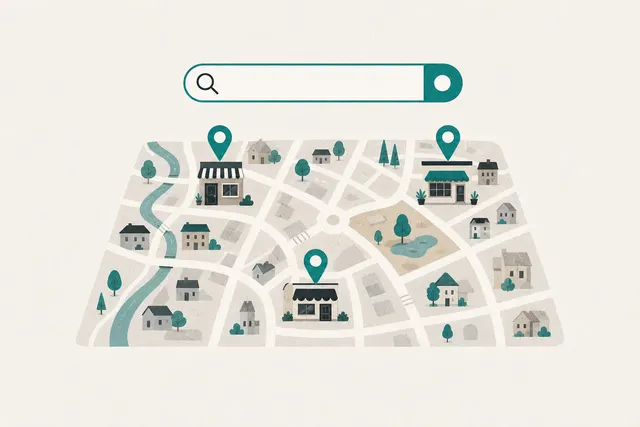
Local SEO is the work that gets your business found when someone nearby searches for what you do, mostly in Google's map results. You improve it through your Google Business Profile, your reviews and your website's service and suburb pages.
Already have a site? Run our free website audit for a score on speed, Google and design.
Where this comes from
The ranking factors below are Google's own, from its Business Profile help pages, read on 21 October 2026 and linked at the bottom of this page. The practical parts come from setting up local search for our own studio in Melbourne, which we wrote up step by step in The Climb.
Local SEO and regular SEO
Regular SEO is about ranking your website for a search anywhere. Local SEO is about searches where the location matters: "electrician near me", "physio Box Hill", "cake shop open now". For those, Google shows a map with three businesses first, and most people pick from those three before scrolling to the websites below. Local SEO is how you get into that box, and how your website backs it up.
Google's three local ranking factors
| Factor | What Google says it means | What you can do about it |
|---|---|---|
| Relevance | How well a Business Profile matches what someone is searching for | Pick the right categories, list every service, and give each one a page on your site |
| Distance | How far each business is from the customer who's searching | Nothing. Set your service area honestly and win the suburbs you actually serve |
| Prominence | How well-known a business is, including how many websites link to it and how many reviews it has | Earn reviews, reply to them, and get listed and linked by real local sites |
The five parts of local SEO you control
Almost every piece of local SEO work fits under one of these:
- Google Business Profile. The free listing that feeds the map pack. Google says businesses with complete and accurate information are more likely to show up, so fill in categories, services, hours, photos and service area. You qualify if you meet customers at your address or travel to them. A rented mailbox or virtual office doesn't.
- Reviews. Google names review count and ratings as part of prominence. Ask every happy customer, make it one tap with a direct link, and reply to every review, good or bad.
- Consistent details (NAP). NAP is your name, address and phone number. They should read exactly the same on your website, Business Profile, Facebook and every directory, so Google can be sure they're all the same business.
- Service and suburb pages. A page for each service you offer helps relevance. A page for a suburb helps only when it says something true and specific about working there: jobs done, travel time, local conditions. Twenty copies of one page with the suburb swapped out help nobody.
- Local links and mentions. Links from your supplier, a trade association, a local sports club you sponsor or a council directory all count toward how well-known you are.
The basics in one afternoon
- 1
Claim and verify your Business Profile
Go to google.com/business, claim your listing, and verify it. If you work from home and travel to customers, hide your address and set a service area, as Google's guidelines ask.
- 2
Fill in every field
Main category, extra categories, each service, hours, phone, website, and at least a handful of real photos of your work. Use your real business name with nothing added. Google's guidelines don't permit taglines or extra words in the name.
- 3
Match your details everywhere
Copy your name, address and phone from the profile, character for character, into your website footer, Facebook page and any directory you're listed in.
- 4
Send your first review requests
Copy your review link from the profile and text it to your last ten happy customers. Reply to each review when it comes in.
What local SEO can't fix
Distance is the one factor you don't control. A business in Ringwood won't usually show in the map pack for someone searching in St Kilda, however good its profile is. Google also says there's no way to request or pay for a better local ranking, so anyone selling a guaranteed map-pack spot is selling something Google says doesn't exist. What you can do is win the area you really serve, and let your website rank for the wider searches where the map matters less.
Things that get profiles suspended
Each of these goes against Google's guidelines for Business Profiles:
- A virtual office or rented mailbox used as your address.
- Extra words in the business name, like "Smith Plumbing Best Plumber Melbourne".
- A second profile for the same business to cover more suburbs.
- Bought or swapped reviews.
Sources
- Google Business Profile Help: Tips to improve your local ranking on Googlehttps://support.google.com/business/answer/7091
Relevance, distance and prominence, complete information, reviews, and that there's no way to pay for a better local ranking.
- Google Business Profile Help: Guidelines for representing your business on Googlehttps://support.google.com/business/answer/3038177
Who qualifies, hiding a service-area address, business name rules, and virtual offices.
Where to next
- Step 03 of The Climb: speaking your city's language
How we made our own site relevant to Melbourne searches.
- Step 06 of The Climb: setting up a Google Business Profile
The eligibility question, and the profile we set up.
- Search, ads and Business Profile help
What we do once the site is live.
Local SEO, built into the site
Our Growth package includes local SEO from the start: service and suburb pages with real substance, local business markup, and analytics in your dashboard. We'll design your homepage free before you pay anything.
Common Questions
Some of the sites we've built
All projects


